


Quick answer: The easiest way from Barcelona Airport (BCN) to Lloret de Mar is the direct Moventis bus, which leaves from both Terminal 1 and Terminal 2 and takes about 1 hour 30 minutes. One-way tickets start at €12.90 and include Wi-Fi. There is no train station in Lloret de Mar, so the rail alternative means two changes plus a local bus and takes over two hours. A taxi covers the 75 km in roughly an hour but costs €110–140, so pre-booking a private transfer usually makes more sense for late arrivals or groups.
Where Lloret de Mar sits, and why there is no train
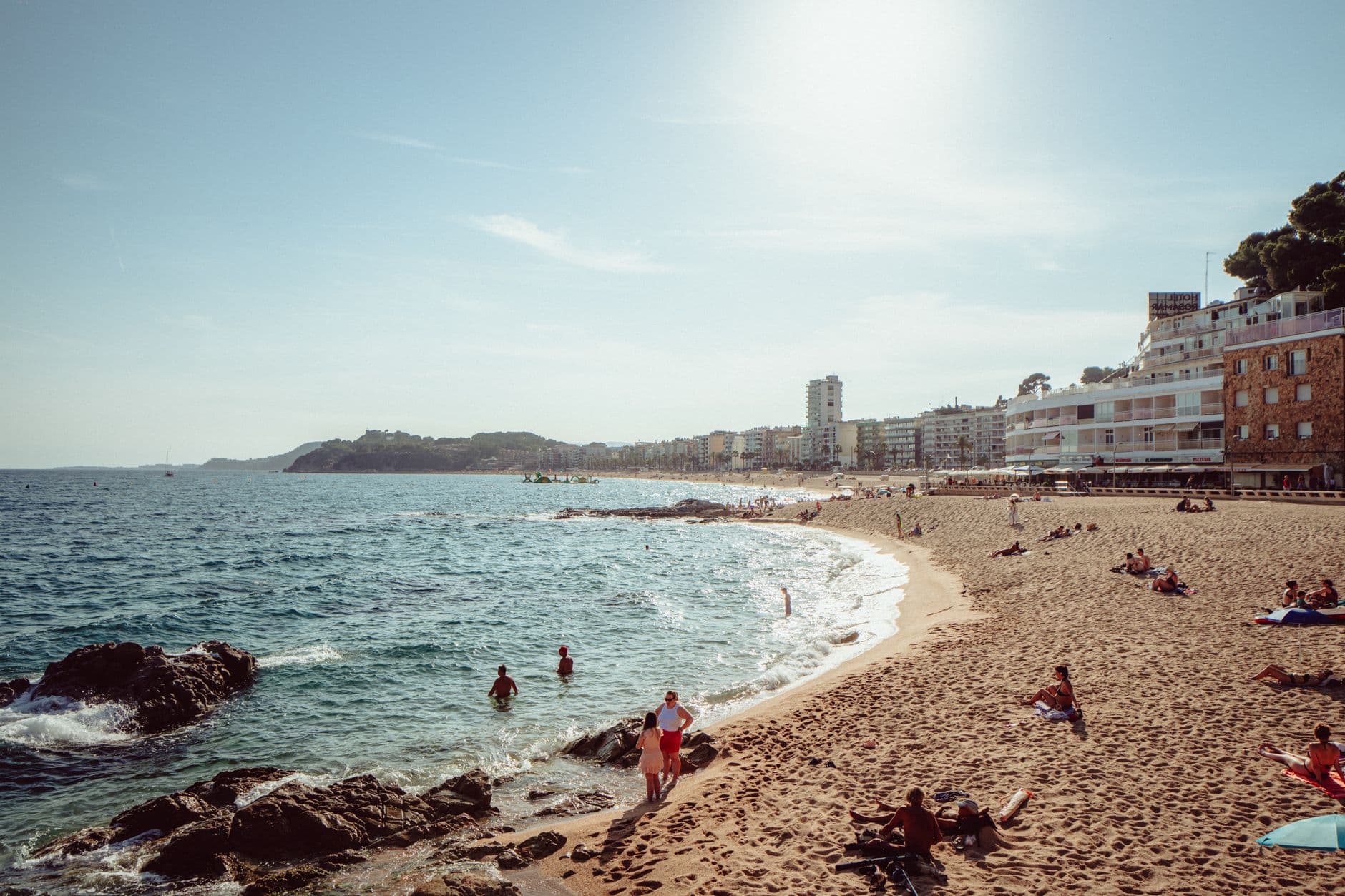
Lloret de Mar is the largest resort on the southern Costa Brava, about 75 km northeast of Barcelona Airport in the province of Girona. It is one of the most popular package-holiday destinations in Spain, yet the railway line along the coast stops short of it: the nearest station is Blanes, one town south. That single fact shapes every route below. Whatever you choose, the last few kilometres into Lloret happen by road.
You have three realistic options: the direct airport bus, a train-plus-bus combination through Barcelona, or a taxi/private transfer. Here is how they compare.
Option 1: Direct bus from the airport (the default choice)
Moventis, operating through its coastal brand Sarfa, runs a direct, non-stop coach between Barcelona Airport and Lloret de Mar bus station. It is the only public transport option that requires zero changes.
- Departure points: both Terminal 1 and Terminal 2, so you don't need the shuttle between terminals to catch it.
- Journey time: around 1 hour 30 minutes, traffic permitting.
- Price: from €12.90 one-way, Wi-Fi included. Buying online in advance secures your seat on busy summer dates.
- Frequency: several departures spread across the day in high season. The service is seasonal in character: from roughly November to the end of March the timetable is reduced, so always check the current schedule on the operator's site before relying on it.
The bus arrives at Lloret de Mar's Estació d'Autobusos, a short walk or a €7–10 local taxi ride from most hotels near the seafront. If your flight lands in the evening, check the last departure carefully: in summer the final coach typically leaves in the mid-to-late evening, and after that your only options are a taxi or pre-booked transfer.
At a glance: airport to Lloret de Mar in 2026
| Option | Time | Cost (one-way) | Best for |
|---|---|---|---|
| Direct bus (Moventis/Sarfa) | ~1 h 30 min | from €12.90 | Almost everyone |
| Train + train + bus | 2–2.5 h | ~€10–15 | Rail fans, off-peak arrivals |
| Taxi from the rank | ~1 h | €110–140 | Late-night arrivals |
| Pre-booked private transfer | ~1 h | fixed quote, often below taxi rate | Families, groups, night flights |
Option 2: Train via Barcelona and Blanes
If the bus times don't fit, the rail route works, it just asks for patience. It has three legs:
- Airport → Barcelona Sants. Take the Rodalies R2 Nord commuter train from the airport station next to Terminal 2 (free shuttle bus from T1). Trains run every half hour and reach Sants in about 20 minutes. Our Barcelona Airport train guide explains the ticketing in detail.
- Sants → Blanes. Change to the R1 line towards Blanes or Maçanet-Massanes. The coastal ride takes roughly 1 hour 20 minutes and hugs the Maresme shoreline, genuinely scenic on a clear day.
- Blanes → Lloret. A connecting local bus runs from Blanes station to Lloret de Mar in about 20 minutes. Rodalies sells a combined "Tren + Bus" ticket that covers this final leg together with the train, so ask for it (or select it at the machine) rather than paying the bus driver separately.
Budget 2 to 2.5 hours door to door and roughly €10–15 depending on fare zones. With luggage and two changes, most travellers find the direct bus easier — but if you land mid-morning and the next coach is hours away, the train can actually get you there sooner.
Option 3: Taxi or private transfer
A metered taxi from the official ranks outside T1 and T2 takes about an hour to Lloret de Mar and generally costs €110–140, depending on time of day and luggage. Ride-hailing apps quote similar money for the route. For a solo traveller that is a steep premium over the €12.90 bus; for a family of four landing at midnight, it can be entirely rational. Read our airport taxi guide for how the ranks and surcharges work.
A pre-booked private transfer usually beats the rank on predictability: you get a fixed quote, a driver watching your flight for delays, and a child seat if you request one. Prices for a standard car tend to land in the same range as a taxi or slightly below it, and the per-person cost drops fast when a minivan carries six. Options and booking advice are covered in our Barcelona Airport transfers overview.
Arriving late at night
This is where planning pays. The direct bus does not run around the clock, and the Rodalies combination is impractical after the last connections leave in the late evening. If your flight lands after roughly 22:00, treat a taxi or pre-booked transfer as the working assumption and consider the bus a bonus if the timetable happens to cooperate. Booking a transfer before you fly is cheaper than negotiating at 1 a.m., and Lloret's 75 km distance means no driver will take the trip casually off-meter.
Return journey and practical tips
- Going back to BCN: the same Moventis coach runs in reverse from Lloret bus station. On summer Saturdays, the classic package-holiday changeover day, book the return seat as early as your outbound one.
- Allow a buffer: the AP-7 and C-32 corridors can crawl on August weekends. For a homebound flight, take the bus that arrives at least 2.5 hours before departure.
- Which terminal: the coach serves both, but confirm where your airline departs from in our terminals guide so you get off at the right stop.
- Luggage: coaches take standard suitcases in the hold at no extra charge; the Rodalies trains have no dedicated luggage space beyond overhead racks.
About the author
Barcelona BCN Airport Guide Editorial Team
Published:
Last updated: